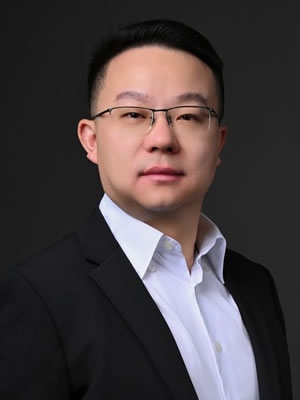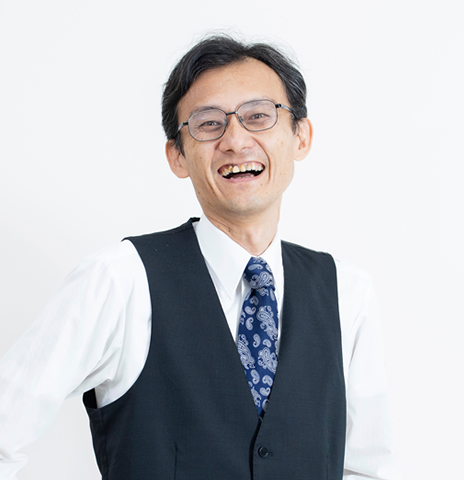
Essam A. Rashed
University of Hyogo, Japan
Homepage
International workshop associated with the Asian Conference on Computer Vision (ACCV 2026), Osaka, Japan, 14 Dec. 2026
Foundation models are rapidly transforming computer vision by enabling general-purpose representation learning, multimodal reasoning, promptable segmentation, image–text understanding, and flexible adaptation to downstream tasks. In medical imaging, these capabilities have strong potential to support diagnosis, treatment planning, disease monitoring, radiology report generation, and surgical guidance. However, translating foundation models into clinical practice raises critical questions of trustworthiness, safety, reliability, privacy, robustness, interpretability, fairness, and clinical validity. Medical imaging differs fundamentally from natural-image analysis: clinical decisions often hinge on subtle findings, rare pathologies, scanner/site variability, missing modalities, and uncertain labels, so a model that performs well on benchmarks may fail under domain shift, demographic imbalance, or incomplete clinical context. Moreover, medical data are highly sensitive, making privacy-preserving learning, federated evaluation, secure deployment, and responsible data governance central to progress. This workshop provides a focused forum on how foundation models can be developed, evaluated, adapted, and deployed responsibly in medical imaging, bringing together researchers from computer vision, medical image analysis, trustworthy AI, data privacy, radiology, and clinical AI to address both algorithmic advances and practical barriers to clinical translation.
Foundation models are rapidly reshaping medical imaging by enabling adaptable and general-purpose solutions across diverse imaging modalities, anatomical regions, and clinical tasks. However, their translation into real-world healthcare remains limited by critical concerns regarding reliability, robustness, explainability, fairness, privacy, safety, and clinical validity.
The TrustFMI Workshop invites original research contributions that advance the development, evaluation, and responsible deployment of foundation models in medical imaging. The workshop aims to bring together researchers, clinicians, engineers, and industry practitioners to examine not only what foundation models can achieve, but also how their outputs can be made dependable, transparent, equitable, and clinically meaningful.
We welcome methodological, empirical, clinical, and position papers addressing trustworthy foundation models across radiology, pathology, ophthalmology, dermatology, ultrasound, endoscopy, and other biomedical imaging domains. Contributions involving vision, vision–language, multimodal, generative, and agentic foundation models are particularly encouraged.
Topics of interest include, but are not limited to:
We particularly encourage submissions that move beyond performance on conventional benchmarks and provide rigorous evidence of reliability under realistic clinical conditions. Studies involving external validation, multi-institutional evaluation, clinically relevant failure analysis, prospective assessment, or collaboration with healthcare professionals are highly welcomed.
All submissions will undergo peer review. Accepted contributions will be presented during the workshop as oral or poster presentations, providing opportunities for scientific exchange and interdisciplinary discussion. Submission instructions, formatting requirements, and important dates are provided below.
🏆 Best Paper Award: The outstanding paper presented at TrustFMI 2026 will be recognized with a Best Paper Award and a CHF 200 cash prize (Sponsored by MDPI).
University of Hyogo, Japan
Homepage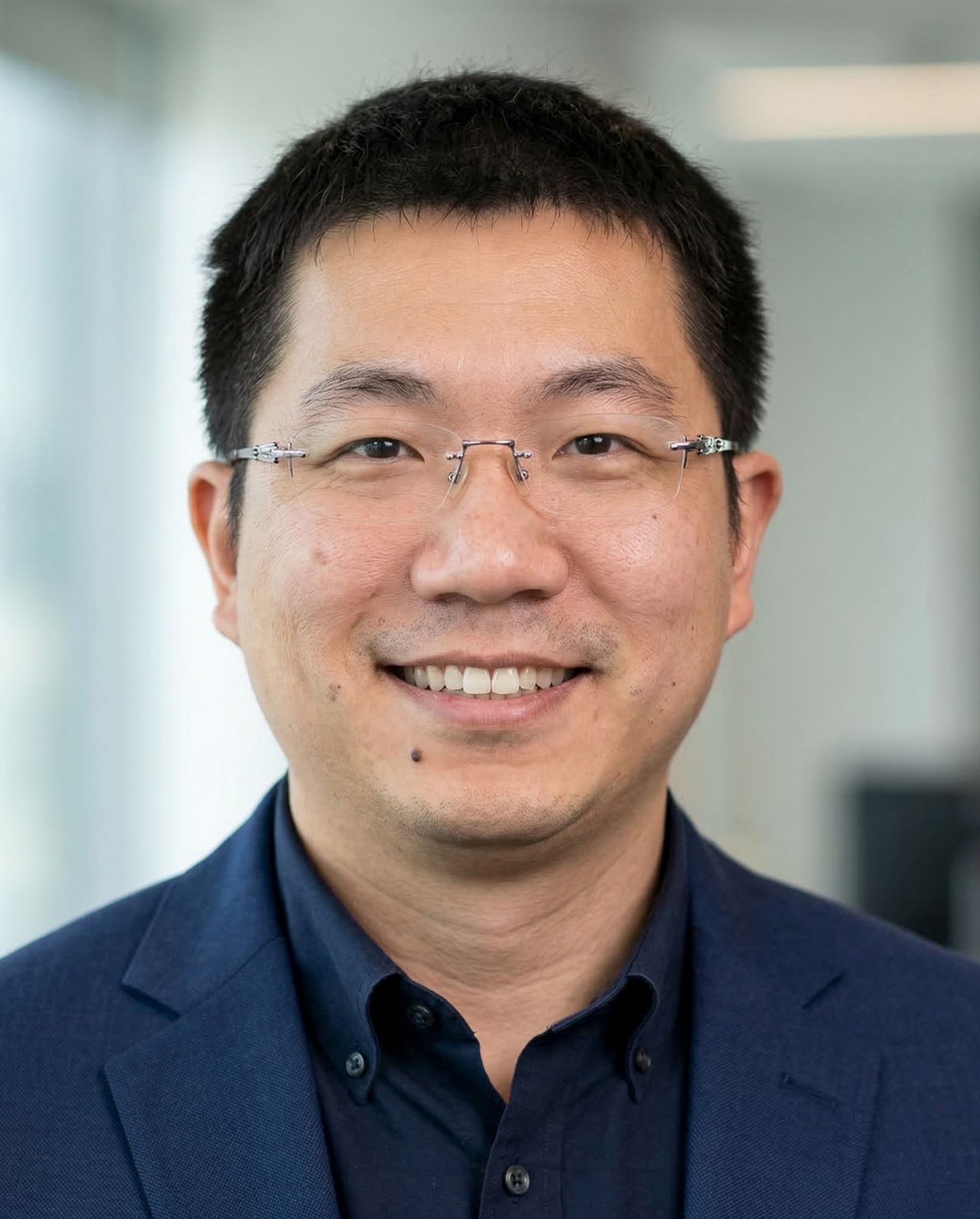
Institute of Science Tokyo, Japan
Homepage
Panasonic Holdings Corporation, Japan
HomepageAbstract: Foundation models promise reusable representations across medical imaging tasks, modalities, and institutions. Their scale, however, also amplifies a familiar problem: performance and safety are usually reported as population averages, whereas clinical decisions and privacy harms occur at the level of individual patients. This keynote argues that trustworthiness must therefore be established at the intended operating point and across the distribution of individual risk—not inferred from a single aggregate metric. We begin with the biometric information contained in medical data. In our work, patient identity could be recovered from chest radiographs with an area under the curve of 0.994, despite the removal of conventional identifiers. Related findings in pathological speech and fetal ultrasound show that this is not an isolated property of one modality. Models pretrained on such data must consequently be evaluated not only for diagnostic utility, but also for the identity information their representations retain. The same distinction between aggregate performance and individual behaviour appears in both clinical evaluation and privacy auditing. Classifiers with identical overall AU-ROC can differ substantially in the sensitivity and specificity range required for deployment. Conversely, membership-inference attacks may appear close to random when averaged over a dataset while achieving near-perfect success for particular patients. The number of highly exposed patients increases with model capacity, with underrepresented groups bearing disproportionate risk. An average, in other words, is not a safety property. This perspective leads to a constructive research programme. Targeted anonymisation, privacy-aware synthetic imaging, differential privacy, and federated learning demonstrate that privacy, utility, and fairness can be measured jointly rather than treated as abstract or necessarily opposing goals. Results from multimodal adaptation, retrieval and reasoning, and specialist vision-language curricula further show why evaluation must reflect the clinical task rather than generic model capability. Finally, I relate these measurements to FAU's joint role, with TUM and LMU, in the open, multimodal medical foundation model within the Bavarian KI-Basismodell-Initiative. Openness makes rigorous auditing possible. Medical foundation models should be treated as clinical instruments: accepted through evidence at the conditions of use, not trusted by declaration.
Abstract: Most contemporary mainstream artificial intelligence models are heavily data-driven. Because the cardinalities of their domain and codomain sets do not match, these algorithms fail to satisfy the third condition of a well-posed problem, making them fundamentally ill-posed. In natural environments, they are highly vulnerable to complex environmental disturbances like smoke, rain, and haze, as well as intentional threats such as adversarial attacks and backdoor poisoning. Consequently, their robustness and interpretability face dual challenges. Starting from the feasibility of stable solutions and interpretability mechanisms in computer vision tasks, this presentation systematically explores the multiple threats and challenges visual models encounter in complex settings. The content covers traditional vulnerabilities—including adversarial examples, backdoor attacks, and physical camouflage—while highlighting our team's latest technical explorations in attribution mechanism modeling, counterfactual generation, and forward-perturbation assistance. Ultimately, this talk delivers comprehensive defense and performance enhancement strategies spanning the entire lifecycle from training to deployment.
Abstract: Recent advances in deep learning and foundation models have substantially improved the performance of medical image analysis. However, high predictive accuracy alone does not necessarily make an AI system trustworthy or clinically useful. In clinical practice, physicians need to understand not only what an AI system predicts, but also why the prediction is reasonable, under what conditions it may fail, and whether its reasoning is consistent with medical knowledge and the available evidence. In this talk, I will discuss the requirements for trustworthy medical AI from the perspective of clinical deployment. In particular, I will introduce our concept of scientific reasoning intelligence, in which AI systems are designed to evaluate diagnostic hypotheses through evidence, perturbation, and consistency rather than relying solely on learned statistical associations. Such an approach provides a framework for examining whether an AI decision is supported by medically meaningful image features and whether the conclusion remains stable when the underlying evidence is altered. Several examples from our medical imaging research will be presented, including diagnostic and prognostic analysis of radiographic and other clinical images. These studies illustrate practical challenges such as limited datasets, heterogeneous imaging conditions, temporal clinical information, anatomical variability, and discrepancies between model performance and clinically meaningful decision making. Finally, I will discuss how explainability, reasoning, uncertainty, and interaction with clinicians should be integrated into future medical foundation models. Trustworthy medical AI should not simply provide a highly accurate answer; it should provide evidence that enables clinicians to evaluate when and why that answer can be trusted.
Abstract: Foundation models and deep learning systems for medical imaging report ever-higher benchmark performance, yet many clinicians remain hesitant to rely on them. This talk examines that hesitation not as technophobia, but as a rational response to what clinicians actually observe when AI enters the hospital. I will present real cases in which computer-aided detection systems missed lesions, revealing two disappointing patterns. First, the lesions missed by AI are strikingly similar to those missed by human readers — including lesions that are, in retrospect, large and clearly visible, the very kind that human perceptual errors are known to overlook. Such correlated errors are troubling: the value of a second reader rests on the independence of its mistakes, so an AI that stumbles exactly where humans stumble adds little sensitivity. Second, AI occasionally overlooks findings so conspicuous and clinically critical that the miss is simply inexcusable. This is why clinicians trust AI roughly as they trust first-year interns — barely: catastrophic mistakes cannot be ruled out. Worse, an intern can at least say "I am not sure — please help me," something today's AI still cannot. Building on these observations, I will discuss what clinicians truly ask of medical AI, and why it is not what leaderboards optimize for.
This is a half-day in-person workshop. The program combines several short invited talks, peer-reviewed oral presentations, a dedicated poster session, and a panel on clinical translation and trustworthiness (tentative).
Tentative program is as follows:
13:00 – 13:10: Opening Remarks
13:10 – 13:45: Invited Talk 1
13:45 – 14:20: Invited Talk 2
14:20 – 15:20: Coffee break & Poster Session
15:20 – 15:55: Invited Talk 3
15:55 – 16:25: Oral Session 1
16:25 – 17:00: Invited Talk 4
17:00 – 17:30: Oral Session 2
17:30 – 17:55: Panel Discussion
17:55 – 18:00: Closing Remarks
Venue: Osaka International Convention Center (Grand Cube Osaka), 10th Floor, Room 1004 (floor map)
The workshop will solicit original research papers, short papers, and position papers (full papers: 6–8 pages; short papers: 4 pages, excluding references). All submissions will undergo double-blind peer review by at least two reviewers and will be assessed based on technical quality, novelty, relevance, clarity, reproducibility, and potential impact on trustworthy medical foundation models. Only accepted full papers will be included in the official ACCV 2026 proceedings. Accepted short and position papers may be presented at the workshop but will not be included in the ACCV 2026 proceedings.
The timeline will be aligned with the ACCV 2026 publication schedule.
Papers must be prepared using the official LNCS style files. Authors must download and use the official LaTeX template for the main paper (ACCV_2026_template.zip).
Submit your paper from here: OpenReview
For further details, please contact the organizing committee at: "trustfmi2026@gmail.com".